What Is the Safest Way to Try CBD if I’m on Prescriptions?
If you take prescription medicine and are curious about cannabidiol (CBD), the safest first step is not picking a product. It is checking with the clinician or pharmacist who knows your medication list. CBD can affect how the body processes some medicines, and a product’s label may not tell the whole story about what is inside it.
That does not mean everyone who takes prescriptions must avoid CBD. It means the decision should be made with a professional who can weigh your medicines, health history, and reason for trying it. If you and your clinician decide to proceed, choose a product with a batch-specific certificate of analysis, or COA, and use a careful “start low, go slow” approach.
First, check for possible CBD medication interactions
CBD medication interactions are changes in how a medicine works or how much of it stays in the body when CBD is added. CBD may affect enzymes that help break down some drugs. That can raise or lower a medicine’s levels, potentially changing its effects or side effects. The risk depends on the medication, dose, CBD amount, how often you use it, and personal health factors.
Some medicines deserve particular attention. CBD can interact with certain seizure medicines, including clobazam, and may require monitoring with valproate because of possible liver-related concerns. It may also affect medicines such as warfarin, which requires careful monitoring of blood clotting. Sedating medicines, including some sleep aids and anxiety medicines, may increase drowsiness when used with CBD. These are examples, not a complete list.
Before using CBD, make a list of everything you take: prescriptions, over-the-counter medicines, vitamins, supplements, and occasional-use products. Bring the product label or a link to the exact item you are considering. A pharmacist can often help review interactions, even if your prescriber is not immediately available.
What to ask your doctor or pharmacist
- Could CBD affect any of my medicines or health conditions?
- Would I need a change in monitoring, such as blood tests or checks for side effects?
- Is there a reason I should avoid CBD altogether?
- If we decide to try it, what amount and schedule should I use, and when should I check back?
- Could CBD worsen drowsiness, dizziness, or another issue relevant to me?
“Consult a physician CBD” is sound advice, but the useful part is the conversation: bring your medication list, ask about a specific product, and agree on what to watch for. Do not stop, reduce, or replace a prescription on your own. CBD sold as a supplement is not a substitute for prescribed treatment.
Understand the product type: full-spectrum, broad-spectrum, or isolate
CBD products are often described by which hemp compounds they contain. These categories can help with shopping, but they do not guarantee a particular effect or safety profile. Labels and product contents can differ, so check the COA rather than relying on the category name alone.
Type What it generally contains What to keep in mind Full-spectrum CBD and other hemp compounds, typically including some THC THC may matter for drug testing, sensitivity, or personal preference. Check the batch report for the measured amount. Broad-spectrum CBD and some other hemp compounds, with THC removed or reported as not detected “THC-free” does not prove that every batch contains zero THC. Look for the COA’s detection limit and result. CBD isolate CBD separated from most other hemp compounds It may be a choice for people seeking a simpler cannabinoid profile, but testing and interaction questions still apply.The “entourage effect,” in plain language
The entourage effect is the idea that cannabinoids and other compounds in hemp may influence one another when present together. In simple terms, it is a proposed “team effect.” It is often used to explain why someone might choose full- or broad-spectrum products, but it is not a guarantee of better results. Evidence for specific benefits from this effect is still limited, and it should not outweigh medication safety or reliable testing.
THC-free claims and drug testing: read carefully
People often look for THC-free products because they want to avoid THC or reduce the chance of a positive drug test. Those are not the same goal. A product may have THC below a laboratory’s reporting limit and still not be proven to contain absolutely none. Repeated use, product variability, and the sensitivity of a drug test can all matter.
Drug tests generally look for THC-related compounds, not whether a person intended to take THC. Full-spectrum products are the clearest concern because they are expected to contain some THC. Broad-spectrum products may have THC removed, and isolates are generally more narrowly focused on CBD, but neither a marketing label nor a single test can promise a negative result. If a drug test could affect your job, license, or another important matter, the lowest-risk choice may be to avoid cannabinoid products and ask the testing program or a qualified professional for guidance.
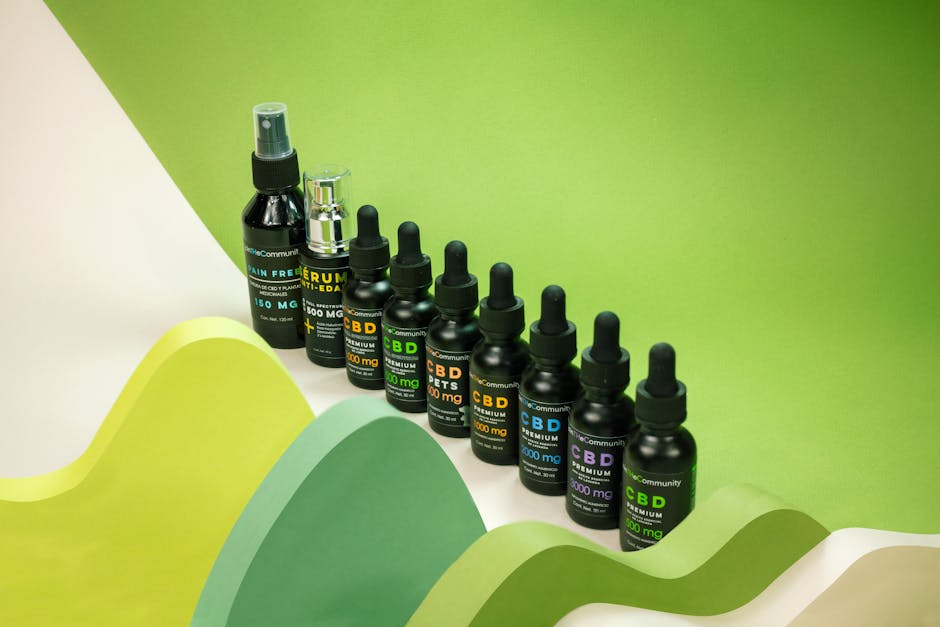
Look for a batch-specific COA that reports THC, including the result and the laboratory’s limit of detection or quantification. “Not detected” means the lab did not measure the compound above its stated threshold; it does not necessarily mean absolute zero. A company’s generic statement that its products are THC-free is not a substitute for a report tied to the bottle’s batch.

How to check a batch-specific COA
A certificate of analysis is a laboratory report describing what was measured in a product sample. A batch-specific COA should match the lot or batch number printed on the package. If the report cannot be tied to the product you are buying, it tells you less about that bottle.
- Match the batch: Compare the lot number on the label with the COA. Check that the product name and format also match.
- Check the cannabinoid results: Look for CBD and THC amounts, units, and serving or package context. Make sure the results are clear, not just a “pass” stamp.
- Review contaminants: Look for testing for heavy metals, pesticides, microbes, and residual solvents where relevant.
- Check the lab: See whether the laboratory is independent and appropriately accredited, such as to ISO/IEC 17025 for relevant testing.
- Check dates and methods: A recent report with methods and reporting limits is more informative than an undated image or a report for a different product.
- Make sure the link works: A QR code is useful only if it opens the actual report for that batch.
Lab https://bizzmarkblog.com/cbd-and-medication-interactions-what-should-i-ask-my-doctor/ testing is a quality check, not proof that CBD is effective or safe for every person. It also does not replace your clinician’s review of possible interactions.
What refinement steps can—and cannot—tell you
Hemp products may go through several steps after extraction. Producers may filter or winterize an extract to remove waxes and fats, then distill it to separate and concentrate compounds. Some manufacturers use additional separation methods, such as chromatography, to reduce or remove THC or isolate CBD. The exact process varies by producer.
These steps can help create a more consistent ingredient, but a process description is not proof of the final contents. Refinement does not automatically remove every contaminant, and it does not guarantee that a product is THC-free. That is why the final product still needs appropriate laboratory testing, including a cannabinoid profile and relevant contaminant testing. Ask the company what its reports cover and whether they are for the finished product, not only a raw ingredient.
Why CBD is easier to find now—and why that does not equal approval
CBD became more visible in the United States after the 2018 Farm Bill changed federal rules for hemp, defining it in part by a limit of no more than 0.3% delta-9 THC by dry weight. That change helped expand the market for hemp-derived products sold in shops and online. It did not mean that every CBD product was reviewed or approved by the Food and Drug Administration (FDA) for safety, quality, or medical use. State rules can also differ.
The FDA has approved a prescription CBD medicine for specific seizure disorders. That is different from the oils, gummies, and other products commonly sold as supplements. Do not assume that research on a prescription medicine applies directly to a retail product with a different dose, formulation, or testing history.
A cautious “start low, go slow” plan
Start low, go https://smoothdecorator.com/what-quality-signals-should-i-look-for-when-buying-thc-free-cbd-online/ slow CBD is a practical approach: if your clinician or pharmacist agrees that trying CBD is reasonable, begin with a small amount and increase gradually only if advised and tolerated. There is no single starting amount that is right for everyone, especially when prescription medicines or health conditions are involved. Ask your clinician for a plan rather than copying a dose from a label or social media post.
- Pick one product. Choose a clearly labeled product with a batch-specific COA. Avoid starting several new supplements at once.
- Follow the agreed schedule. Use only the amount and timing discussed with your clinician or pharmacist. Do not take extra because you do not notice an immediate change.
- Keep a simple log. Note the product, amount, timing, and any changes or side effects. Include changes in prescription medicines.
- Watch for problems. Contact a healthcare professional if you develop concerning drowsiness, dizziness, nausea, or other new symptoms. Seek urgent care for severe symptoms.
- Review before increasing. Check in as planned, especially if you take medicines that require monitoring or if you have liver concerns.
If you notice a possible side effect, stop and contact your healthcare professional for advice. Do not adjust an essential prescription without their guidance. CBD can also cause side effects on its own, and the amount in a retail product may not match the label exactly.
What about prices when comparing products?
If you are reading a scraped article or product roundup with no prices listed, do not treat the missing information as evidence that products cost about the same. Prices can change by size, concentration, sale, and retailer. Check the seller’s current listing and compare the cost per milligram of CBD only after confirming what the package contains and whether the COA matches its batch. A low price is not a quality test, and a high price is not proof of better testing.
The practical bottom line
If you take prescriptions, discuss CBD with your prescriber or pharmacist before buying it. Bring your medication list and the exact product details. If you decide to try it, choose a product with a verifiable, batch-specific COA, understand whether it contains THC, and follow a cautious plan. Be especially careful if drug testing matters to you: no label can guarantee a negative result.
CBD may be a reasonable option for some people, but it is not a one-size-fits-all supplement. A careful conversation, transparent testing, and patience are more useful than bold claims on a bottle.